Final Year Project
DurianCare AI
DurianCare is a web-based artificial intelligence system that identifies durian leaf conditions and provides treatment guidance. Its two-stage computer vision pipeline uses YOLO to localise and crop the relevant leaf region before ConvNeXt-Tiny classifies it as Algal, Blight, Healthy, or Phomopsis. The application also supports accounts, image upload or capture, confidence handling, invalid-image warnings, recommendations, and prediction history.
Key results
Version 5 evaluation summary
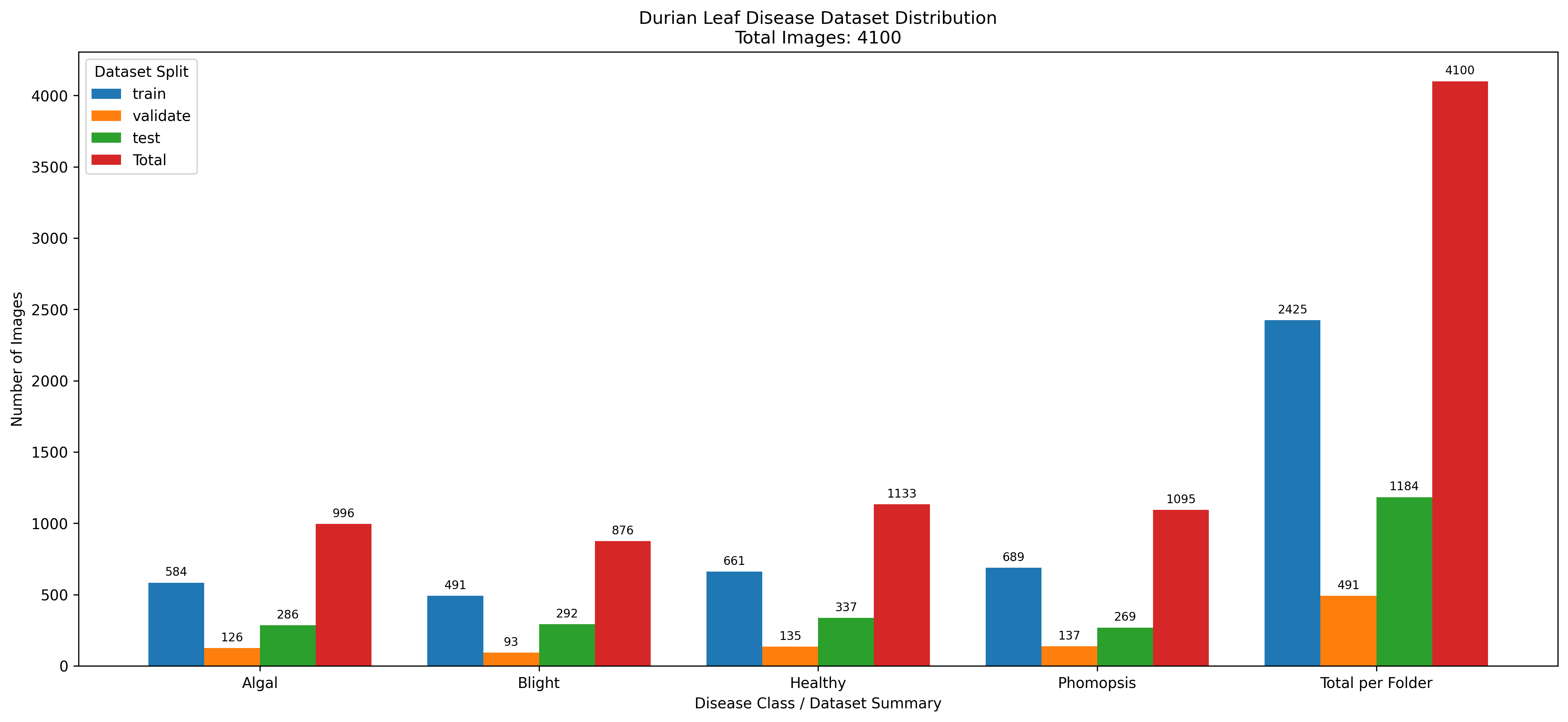
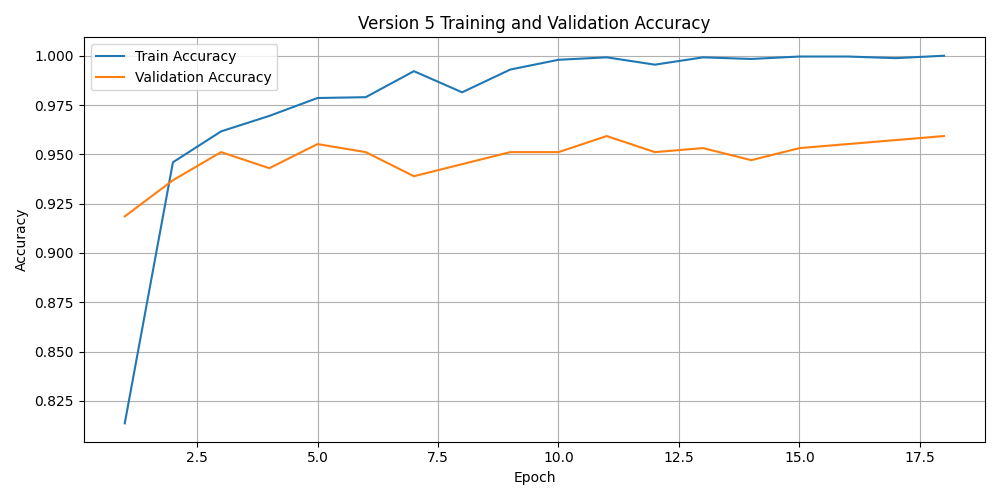
The final Version 5 pipeline was evaluated on 1,184 test images using YOLO leaf localisation followed by ConvNeXt-Tiny classification. Training used 2,425 images, validation used 491 images, the model trained for 18 epochs, and the deployed confidence threshold is 70%.
Individual contribution
My Responsibilities
- Collected, reviewed, cleaned, and organised durian leaf image data for the Algal, Blight, Healthy, and Phomopsis classes.
- Prepared image preprocessing and augmentation for model training.
- Trained and evaluated the ConvNeXt-Tiny classifier using PyTorch.
- Integrated YOLO-based leaf localisation before disease classification.
- Connected the Python inference pipeline to the PHP and MySQL web application.
- Implemented prediction results, confidence handling, treatment recommendations, invalid-image warnings, and prediction history.
- Tested and debugged the end-to-end image upload and prediction workflow.
Technical evidence
AI Development & Evaluation
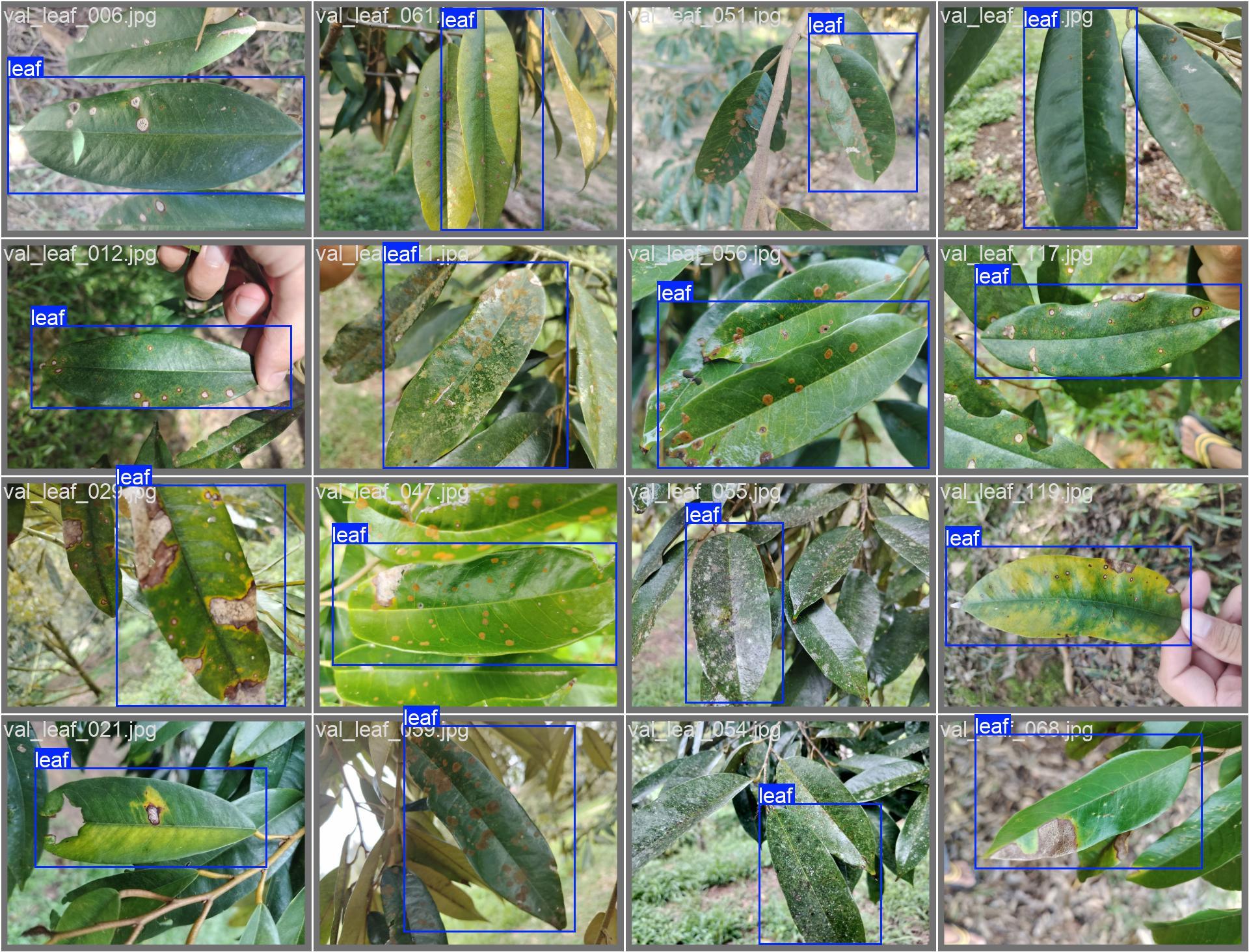
YOLO Leaf Localisation
YOLO detects and crops the relevant durian leaf region before ConvNeXt-Tiny classification, reducing interference from hands, soil, surrounding leaves, shadows, and other background content.
If no suitable leaf region is detected, the system returns an invalid or unclear image warning instead of forcing a prediction.
Dataset Distribution
The final dataset contained 4,100 images: 2,425 training, 491 validation, and 1,184 test images across four leaf-condition classes.
Training and validation used prepared leaf crops, while the test set used original images to evaluate the complete pipeline.
Training & Validation Accuracy
Across 18 epochs, training accuracy increased to nearly 100%, while validation accuracy stabilised at approximately 95% to 96%. The best monitored model was saved for deployment.
Training & Validation Loss
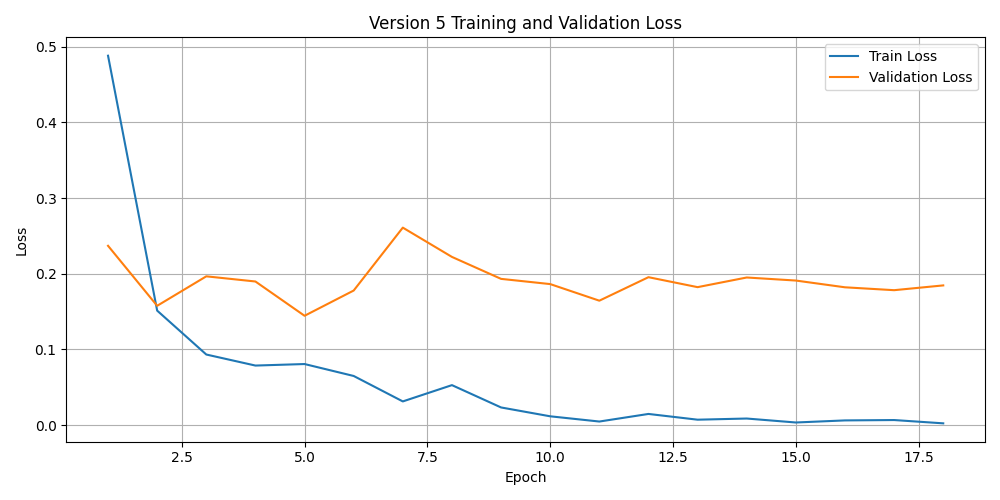
Training loss decreased steadily, while validation loss remained comparatively stable after early fluctuations. Both curves informed final model selection.
A visible training–validation gap remained, so test-set evaluation was used to assess final generalisation.
Confusion Matrix
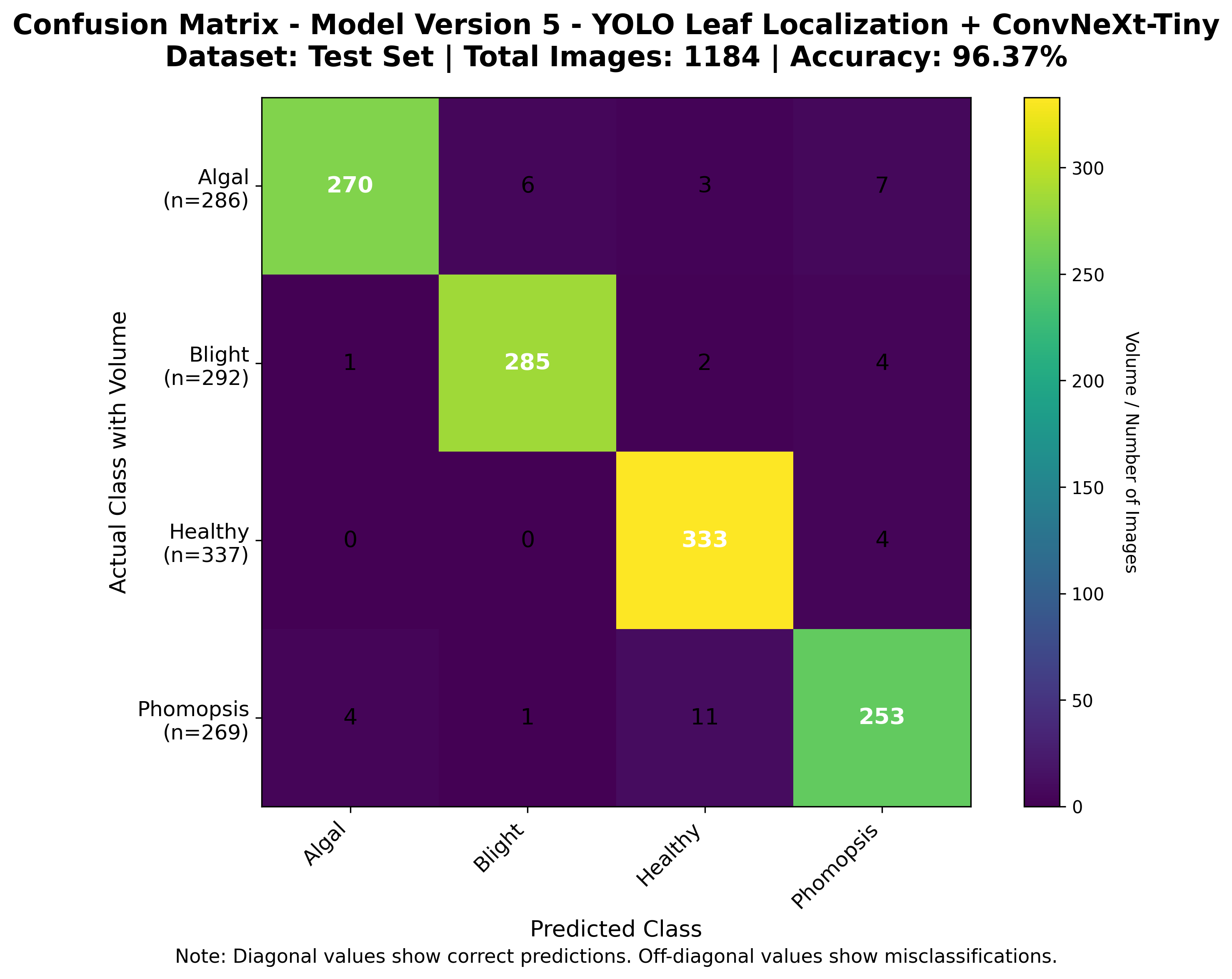
The Version 5 pipeline achieved 96.37% test-set accuracy across 1,184 images. Most samples were classified correctly; the largest remaining confusion was Phomopsis predicted as Healthy.
Correct predictions: Algal 270/286, Blight 285/292, Healthy 333/337, and Phomopsis 253/269.
Deployed application
System Implementation
The deployed web application connects the AI pipeline with user registration, image submission, prediction results, confidence handling, treatment guidance, and stored prediction history.
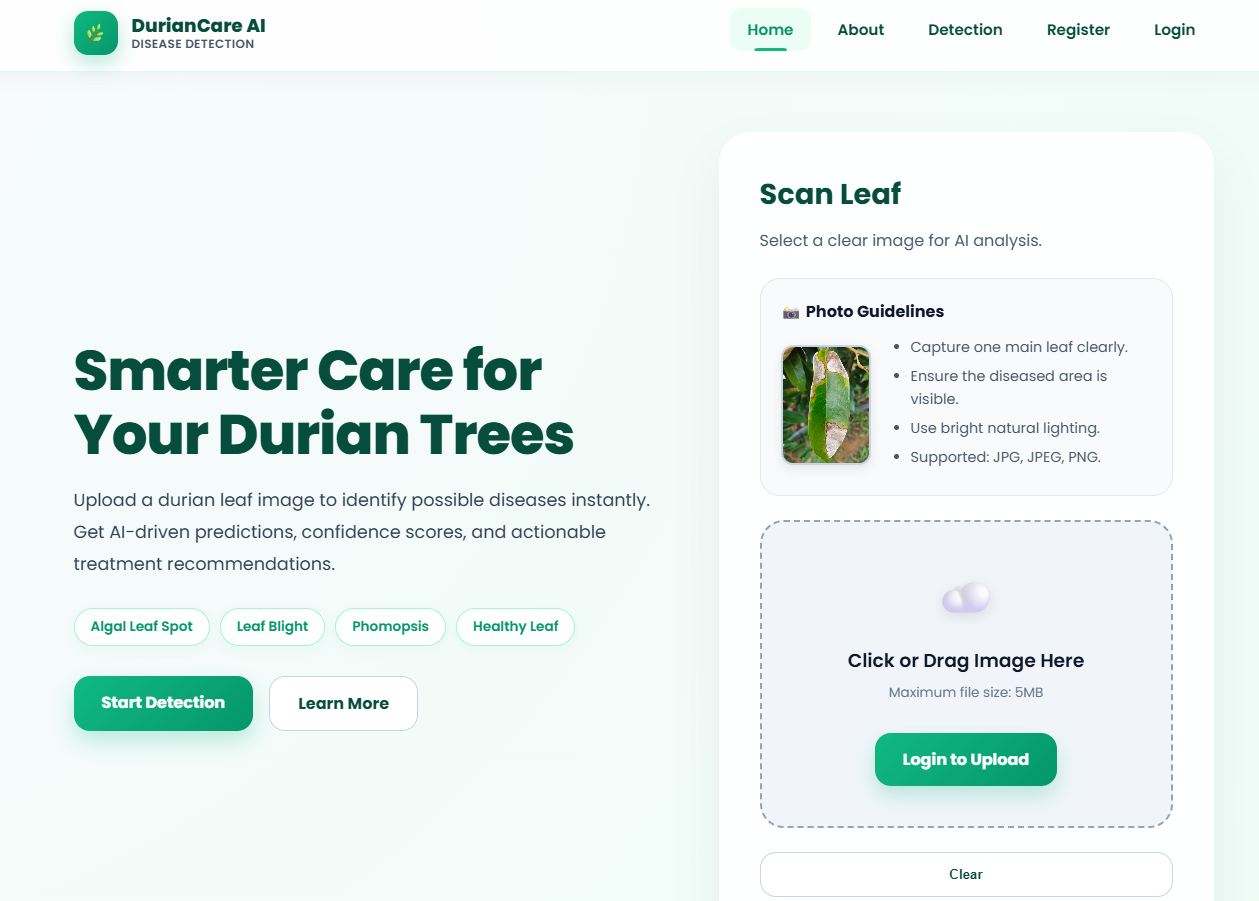
User-friendly system homepage
Introduces the system and provides access to its main durian leaf disease detection functions.
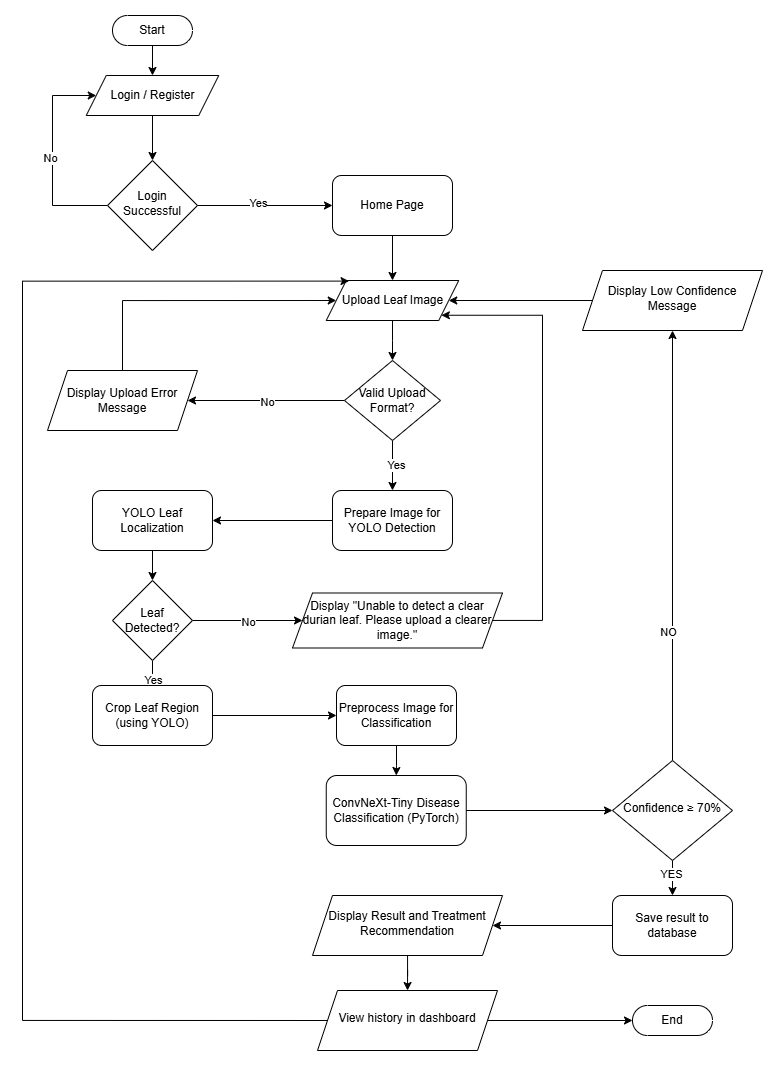
AI prediction process
Explains the complete process from image upload and leaf localisation to classification and result storage.
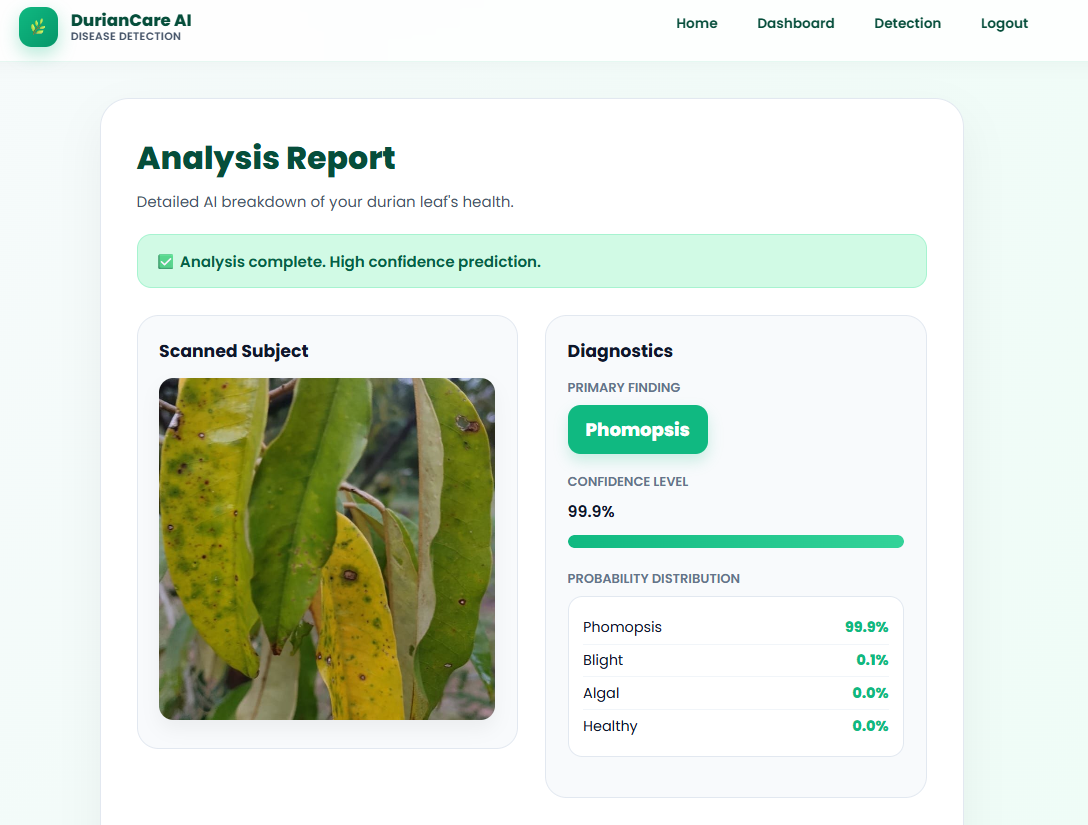
Prediction and treatment output
Displays the detected condition, confidence score, and recommended treatment guidance.